Tuesday, May 14, 2013

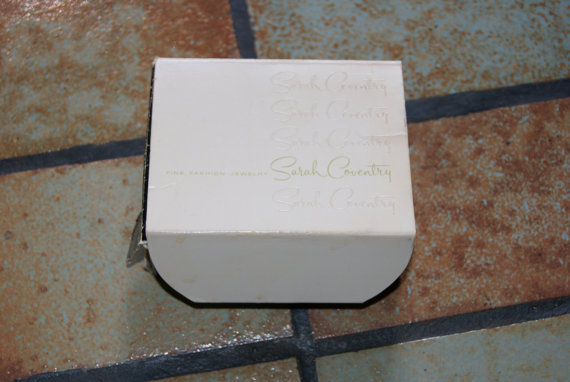
Why that’s a… what is that exactly?


Why, that’s a simple guess!  Oh wait; it’s not a Stanley plane?  What is it, then?

Well, its round, that’s for sure.  It’s also a cross-collectible.  Anyone who’s into barware, portraits, anything metal or advertising would love this item.

Do you have any guesses on what this could be?

Thursday, May 9, 2013

They really made a porcelain license plate?

In days gone by, car ownership was a mark of wealth.  But it was often hard to distinguish one car from another.  So the license plate was born.

Originally, license plates were handmade out of any object on hand—leather, wood, etc—using the number issued by the state.  Many felt, though, that handmade plates detracted from the overall appearance of a car.  Starting in 1903, both cities and states issued porcelain plates.  Porcelain manufacturing for kitchenware had been around since the previous century, and the states began to use it for standardized plates as car ownership increased.


One of the companies that produced this style of plates was the Brilliant Manufacturing Company.  The Brilliant Manufacturing Co out of Philadelphia Pennsylvania produced porcelain license plate for the state of New Jersey. Brilliant was one of the more prolific porcelain license plate manufacturers on the scene, but they got a late start on making plates when they started in 1911.


This license plate was made by Brilliant Manufacturing and is dated 1915, which is the end of when the porcelain license plates were made.

One area of importance is where the plate is mounted to the car; this area often gets damaged and rusts to the point where the mounting holes look like craters.  This plate is also missing the round badge that was mounted above the date on the right hand side.  Since this was held on with pop rivets, the rivets often got rusted or worked their way loose to the point where the badge fell off.

Even though this type of plate is no longer used, this makes the perfect item to display on the wall.  You could even have a collection of plates for your own hometown or for the state you live in.

The porcelain license plate can be seen in my Etsy store here.
 
Wouldn’t this look great on a vintage Model T?

Tuesday, May 7, 2013

Whoa, hijacked yet again!

Hello, it’s Jake again.  With springtime rolling around, John has gone to yet another estate sale, so I have decided to stay here and do a blog post for him.


As I was sitting by the front door and watching out for the squirrels, I realized that this is the time of year that you could get very sick, very quick.  It’s too warm for that heavy winter coat and it’s too cold to be running around in shorts and a short sleeve t-shirt.

So what do you do?  Make sure that you plan ahead and wear a sweatshirt, and even possibly take a lightweight jacket with you in case the temperature drops even more.


 And remember—it’s always easier to take off, or even throw on, an extra pair of socks than it is to take care of a nasty cold down the line.  I wouldn’t want to miss a walk because of it!

Wednesday, May 1, 2013

The perfect dress for any spring wedding

Just in time for the wedding season: a beautiful 1940s-era wedding dress!  This handmade dress features delicate lace detailing around the neck, as well as a feminine ruffled collar and pretty tapered sleeves.
 

The veil and long sleeves are reminiscent of the gown Queen Elizabeth wore in her own wedding—but the real show-stopper is the lovely, elegant train!


Being handmade, there is no tag on the dress to tell who made this dress.  But the unknown seamstress put some great details on it, like hiding the zipper under the arm.


The wedding dress can be seen in my Etsy store here.

Now all you need is something old, something new, something borrowed, and something blue.

Wednesday, April 24, 2013

A movie poster overview for the beginning collector

Just about anyone who walks by a movie theater will see at least one poster hanging in the window advertising what’s playing.  These posters will eventually come down when new movies are released.

From 1940 to 1984, the National Screen Service produced the posters for the film studios.  The theaters would return the posters to the NSS so that they could be sent to other theaters.  During this time, movies were kept in the theaters for several years.  Because the posters were sent out to several theaters, they were often in rough shape when they were finally pulled from circulation.

Movie posters come in so many different sizes and varieties, it can make your head spin like a cheap horror movie villain’s head!  Here’s a brief breakdown:

Lobby cards—these were really popular in the 1910’s and 1920’s, and are small advertisements for the movies.  Lobby cards were usually produced in a set of 8 and hung all around the lobby of a theater (this is how they got their name),  and they tended to be black and white scenes from the movie that were often hand-tinted with some color.   These were discontinued in 1985 in the United States.  This type is very collectible for the fact that they are small--usually 11 inches by 14 inches or 8 inches by 10 inches.  They don’t require much display space.

Teaser Poster—these were sent to a theater to advertise a movie that was about to be released.  This type of poster is also known as an advance poster.  There really wasn’t too much information put on the poster.  It had the title, some of the people starring in the movie, and sometimes even a tagline for the movie.  Teaser poster sometimes were released way in advance of the movie to drive up hype, but occasionally funding ran short, and the project was shelved.  It would pay off to see if the movie was actually made if you buy a teaser poster.  Even if the movie was shelved, it could be more valuable if it featured a now-famous actor or director in one of their first movies.

Character Poster—this poster highlights one character from a movie currently playing.  Often, these are characters the public is already familiar with (the movie releasing can often be a sequel or part of a series).  For example, a character poster features Freddie Krueger from the Nightmare On Elm Street, or even Jason Voorhees of the Friday The 13th movies.

As with any collectible, be sure to do your research.  Posters are often reprinted if the movie is a smash hit (like Casablanca, Gone with the Wind, or even The Wizard Of OZ).  You could pick up the reprints at quite a few major retailers, or even online.  When you have an authentic poster, especially from one of these areas, they can really have some good value.

What kinds of movie posters would you proudly display on your wall?

Monday, April 15, 2013

It happened in 1947

April 15th 1947.  It was a Tuesday.  The first day of Major League Baseball is a day that people always look forward to, but this year was special.  Spring was in the air, the smell of hot dogs was wafting around, and Jackie Robinson was making his Major League debut.

When Jackie Robinson took to the field on this day, he became the first African American to play Major League Baseball.  He succeeded in every way possible, and eventually found his way to Cooperstown (which is where the Baseball Hall Of Fame is located).

The collectibles area that features either Jackie’s name or likeness is very wide-ranging.  It includes everything from hats, to jerseys, to ads, or even gloves.


One of the areas that is most sought-after are baseball cards.  Not only are they easy to store, they can also command a very pretty penny.

The downside to collectibles that feature Jackie Robinson is that there are plenty of reproductions or fantasy pieces.  Do your homework to see what an authentic piece looks like.

One of the best ways to tell if the card pictured above is authentic is to look for the TOPPS copyright information on the card.  This is always on the back of the card where the player’s stats are.  The other is to look at the paper stock that the card was made out of.  For 1956, TOPPS used paper stock that had no sheen to it, and the card itself is a little bigger than modern cards.  So if you have a question about a certain card, lay a modern card over it to compare the sizes.


The picture above shows what to look for about the size differences on the cards.
I always look forward to this time of year, with an umpire dusting off home plate and yelling, “PLAY BALL!” to start off the season.  Any other baseball collectors ready for a new season?


Tuesday, April 9, 2013

To clean or not to clean, that is the question

One of the oldest questions in collecting is when to clean—or not to clean—an item.

Sometimes an item’s value will go up if it is cleaned, and other times the items value will go down.

Some items are perfectly fine to clean.  Costume jewelry, glassware, pottery, clothing from the 1970’s or  the 1980’s, and even graniteware are perfect for this area.  A little research can go a long way with these items, though.  You need to find out what can and can’t be used on an item; cleaner can potentially do damage that can’t be undone.  Things like graniteware can be cleaned with oven cleaner, while cheap costume jewelry can be cleaned with toothpaste that has baking soda in it.  Even Alka-Seltzer can be used to clean jewelry.

There are some items that you should take to someone that knows what they are doing when it comes to cleaning.  Artwork, antique books, pricy jewelry (pieces that feature precious stones like diamonds), quilts or antique clothing, and quilting samplers are items that fall in this category.

When it comes to old furniture, silver, gold, modern coins, brass or even copper, make sure that these don’t get cleaned.  The best way to ruin the value of these items is to get out the cleaner.  Patina on these pieces is a great thing to have; it helps prove an items age and provenance.

A great way to start is to get an appraisal of the item.  This way you know what you have.  If the item is in fact valuable and in the need of a cleaning, you could ask the appraiser for a recommendation.

I think the best rule of thumb is that if you have any doubts about cleaning an item, don’t!  Once the original finish is gone, there’s no getting it back.

Have you ever cleaned an item that you wished you hadn’t?

Wednesday, April 3, 2013

Broken Bank Notes From The 1800’s

This sounds like a plot from a book or even a movie, but this actually happened with the banking system.  During the early 1800’s, the banking system was not as safe as it is today.  The banks would go out of business almost as fast as they would open their doors for the first time.

When a bank opened, they were allowed by the United States Government through a charter to print their own paper money.  This was to help the country get the monetary system up and running.

But when a bank went out of business, the money that it produced became no good.  With the country being on the gold and silver standard (which means paper money could basically be traded in for silver or gold coins that equaled the face value of the paper money), it was impossible to take the money in to redeem it.

So how did businesses and other banks know that a bank had gone out of business?  The most common method was to check a list of out-of-business banks, also called “broken banks.”  But many banks folded before they could be added to the list, leaving some businesses with worthless money in exchange for goods and services.
 
Because it was so problematic, the banking system stopped printing money—it became the job of the BEP (which is the Bureau Of Engraving And Printing).  This early form of printing paper money created two types of collectibles—“Broken Bank” Notes and Obsolete United States paper money!

Wednesday, March 27, 2013

What In The World Is Pressed Glass?

Pressed glass has been around here in America since the 1820’s, and has quite a few popular forms.  It can be a cup, vase, plate, bon bon dish, or etc.

Since it’s mold-made, the cost of production of the pieces is lower than items that are handmade.  Because of the lower costs with manufacturing pressed glass, you will see more of the same items on the secondary market.  But this can be a good thing for the collector.  This means that there is a better chance for you to find an example for your collection.  There’s Depression Glass, Goofus Glass, and even Carnival Glass that you can hunt for.


The American Sweetheart sherbets can be seen in my Etsy store here.


The Peacock At The Fountain amethyst tumbler can be seen in my Etsy store here.

The Goofus Glass bowl with the LA BELLE ROSE Pattern can be seen in my Etsy store here.
The Fenton Blue Opalescent Hobnail vase can be seen at Etsy here.
Because pressed glass pieces aren’t so expensive, they can still be used--either in the way that the piece was intended, or in another creative way.  If you have a tumbler, it could double as a small vase, or even a pencil or pen holder on a desk.  A bowl like the Goofus Glass piece listed above could even be used as a centerpiece on a table.
 
You never know what you can find when it comes to pressed glass.  What’s the coolest pressed glass piece that you’ve found?  How do you display or use your pressed glass?

Thursday, March 14, 2013

Great Ideas To Invest Some Money In Trying Times? Try Silver Coins

I have been collecting coins ever since I was a kid.  One of the first stories that I learned about was the coin hoarding of the early 1800’s.


One of the reasons that this happened was the fact that the banking system wasn’t the greatest.  There were plenty of banks that would open up for business, and then be out of business within a couple of weeks or months.  Because of the very shaky ground that the banks were on, people were afraid that they would not get their initial deposits back.

Because of this, people started to hoard silver and gold coins (gold was in circulation in higher denomination coins with a face value of $1, $2.50, $5, $10 and $20).  It got so bad that the lowly little penny was even stockpiled.

The United States Mint (and mints from all around the world, for that matter) still makes pure silver coins, but they are for collectors and investors alike.


With the price of silver going up, it only makes sense to set a few examples aside to watch them go up in value.  If you play your cards right, you can make a tidy profit on your original purchase price.


Friday, March 8, 2013

Another Valuable Lessoned Learned

In March of last year, I opened up a store at Etsy.

 When I first heard of the site, I was under the belief it was geared more for women with handmade items like clothing, or even jewelry.  I quickly realized that the site also offers vintage items that could be tailored to both women and men.

This site has been absolutely fantastic for me.  Not only does this site give you a chance to sell, but they also have what they call “Teams.”  These are groups that you can join that share your same interests.  There are also teams that also give you an opportunity to discuss things like how to promote your items for sale.

I’m a big fan of Etsy—what are your favorite sites for buying and selling?

Wednesday, February 27, 2013

It’s Completely Different Than What I Had Originally Thought It Was—It’s Arabic Made!

A while ago, I talked about what I thought was a handmade and unique coffee pot in a blog post.


An eagle-eyed shopper dropped me a line and told me that the pot was actually Arabic made, and it was from the 1930’s to 1950’s.

It always pays off to do your homework before you post something for sale online, but it’s also extremely nice to have someone also help out and catch an error with a listing.

As for the pot, it’s listing has been corrected and can be seen in my Etsy store here.

Wednesday, February 20, 2013

Types Of Sports Cards

Think a sports card is a sports card?  Far from it.  There are a ton of different types of cards that you could find.  Here’s a few:

Retail Card—these are cards that are sold to major retailers like Kmart.  The cards will often have the name of the store printed on the card as well.  You might even find a card from a now-defunct retailer.
 
Insert Card—these are cards that are inserted into packs at a staggered rate (like one card being inserted into every 24th pack).  There is also a number on the back of every sports card.  The number on the back of the insert card will be different than the normal set numbers.  The normal set numbers will appear as 1-400 (or however many cards are in the set), the insert cards will have a number like ST1, or PL1.  When you buy a pack, you never know what kind of insert card could be in there.  There even could be a player who became much more famous later on.

Sell Sheets—these are not cards at all.  They’re ads that are sent to distributors for cards that are for sale to the public.  This would show what cards you could get in the set, and would show the players that are featured in the set.  You could get these ads from a sports cards dealer for pretty cheap, or even free if the retailer is going to throw them away (it never hurts to ask them if it’s possible for you to have it).  They’re also great to display along with a complete team collection!

So what’s the rarest card that you’ve ever found?

Monday, February 11, 2013

Great Ideas For Valentine’s Day Gifts

With Valentine’s Day right around the corner, I’m sure we’re all thinking about gifts for our loved ones.  Jewelry remains a classic, ever-popular Valentine’s Day gift.

You can see some great jewelry pieces in my Etsy store here.


Another fun idea is to send a vintage Valentine card.
 
You can view these great examples of vintage Valentine’s Day cards in my Etsy store here and here.
 
With so many ideas are out there, there’s no telling what you might find for Valentine’s Day.  What kinds of gift ideas can you think of?

Saturday, February 2, 2013

There’s A New Hot Item Just In Time For Valentine’s Day

Starting in 1953, Fenton produced a line of glass called “Black Rose.”  The best way to describe this line is that it is a combination of Peach Blow and black crest glass.


The original line only lasted two years, and was discontinued in 1955.  Since the line wasn’t around that long, the pieces are more sought-after by collectors.


There have been some pieces made to be sold QVC, and the pieces were marked with a paper label.  If the pieces have been hand-painted, the artist will sign and date the bottom of the piece.  Items that come from the original line will either be unmarked, or have the Fenton name embossed on the bottom.

A picture of the original base can be seen here:


The basket that I have listed in my Etsy store dates to the 1950’s.  With a pink interior, it would be a great item for Valentine’s day.  It could be given to someone holding candy or even a small piece of jewelry or some flowers. 

You can see the Fenton “Black Rose” basket that I have listed in my Etsy store here.